Staged Rollouts for LLM Tool Permissions: Expanding Agent Capabilities Without Creating New Blast Radius
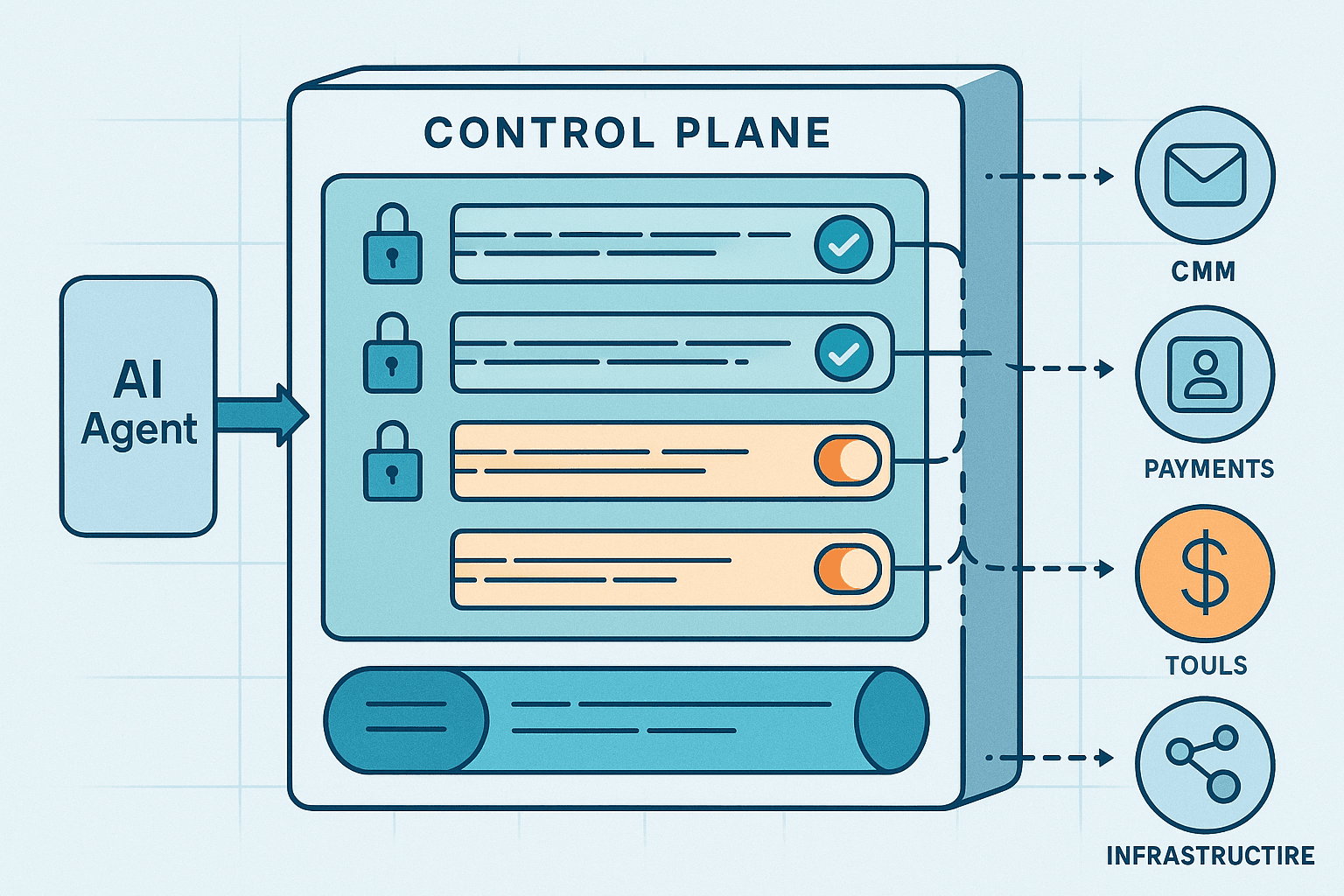
Most teams don’t get into trouble because their first LLM agent is too capable. They get into trouble because the second or third release quietly expands what that agent is allowed to do.
The first version usually looks safe enough: read from a help center, summarize tickets, maybe draft an email. Then someone asks for one more capability. Let it update the CRM. Let it issue refunds under a threshold. Let it restart failed jobs. Let it edit calendar events. Let it open a support case with a vendor. Individually, each request seems reasonable. Collectively, they transform a retrieval assistant into an actor with operational consequences.
That transition is where blast radius appears.
I’ve seen teams treat tool permissions like a product toggle: wire up a new action, test a few happy paths, enable it for a pilot tenant, and rely on prompt instructions to keep behavior in bounds. It works right until the model takes an unexpected branch, over-applies a permission in a context no one anticipated, or chains actions across systems in a way that is locally valid but globally unsafe.
If you are rolling out new tool permissions for LLM agents in production, the hard problem is not just whether the model can call the tool. The hard problem is whether the surrounding system can constrain, observe, evaluate, and progressively trust that capability before it reaches broad user traffic.
The core idea of this article is simple: treat new tool permissions like you would any other high-risk production change. Stage them. Gate them. Observe them in shadow. Define explicit approval boundaries. Make rollout tenant-aware. Record enough audit detail to reconstruct intent and effect. And build evals that focus specifically on unsafe autonomy, not just general answer quality.
The failure pattern: permission growth without a control plane
A real pattern I keep seeing goes something like this.
A support automation team launches an agent that can read ticket history, search documentation, and draft replies. Adoption is strong, so the business asks for more leverage. The team adds tools to:
- update ticket fields
- issue refunds through an internal API
- change subscription status
- create engineering incidents for repeated failures
- send customer emails directly
On paper, they still have “some safeguards.” There are prompt rules like “only refund if policy allows.” There’s a basic allowlist of tools. Maybe there’s a max refund amount in the refund API. The team runs a small pilot and sees reasonable results.
Then a messy real-world case arrives: an enterprise tenant with a custom contract, prior partial credits, and an unresolved billing migration issue. The user asks for help. The agent reads the current ticket, sees billing complaints, calls the refund tool, updates the subscription, and sends a confirmation email. Every individual action succeeds. The model did not hallucinate a tool. The APIs behaved correctly. And yet the outcome is wrong, because the customer contract required manual finance approval and the subscription change should not have happened before migration reconciliation.
This is the key operational lesson: tool misuse in production often comes from authorization context gaps, policy interpretation failures, and action sequencing mistakes, not from dramatic model jailbreaks.
The naive rollout assumes “the model seems good at using this tool.” The production question is broader:
- Under what business contexts is this tool allowed?
- Which tenants, users, workflows, and values are in scope?
- What combinations of tools create emergent risk?
- What evidence must exist before an irreversible action is taken?
- What should run in shadow first?
- When must a human approve?
- How will we detect the agent drifting into unsafe action selection over time?
If you don’t have crisp answers to those questions, you do not have a rollout plan. You have a permissions expansion with hope as the safety mechanism.
Why the naive approach fails
There are five common reasons teams underestimate the risk of adding new tool permissions.
1. They collapse capability and authorization into the same decision
The model decides both what should happen and whether it is allowed to happen. That is almost always the wrong design.
Language models are useful for interpreting messy requests and proposing actions. They are not the right final authority for policy enforcement. When the same model is asked to infer policy from natural language instructions, edge cases leak through. Contract-specific rules, regional compliance, exception workflows, and account state dependencies are too brittle to entrust to prompt-only governance.
2. They define permissions at the tool level, not the action-scope level
“Agent can use refund API” is too coarse. Real permissioning needs narrower scopes:
- refund up to $25
- only for self-serve plans
- only for tenants in supported regions
- only when reason code matches approved taxonomy
- only when no prior exception exists in last 30 days
- never for annual enterprise contracts
This is how blast radius shrinks: not by hiding tools entirely, but by reducing the permissible action surface within a tool.
3. They underestimate cross-tool composition risk
Each tool may be safe alone. The dangerous behavior appears when the model combines them.
For example:
- read CRM notes -> issue refund -> send email confirmation
- search monitoring logs -> restart job -> page on-call -> update incident status
- read HR knowledge base -> change payroll contact -> send manager notice
The sequence matters. Preconditions matter. Ordering matters. Tool chains produce business outcomes, and those outcomes need evaluation as a workflow, not just as isolated tool calls.
4. They launch directly into active execution
A team adds a new permission and immediately lets the agent exercise it for live users. That’s equivalent to deploying a new automation path without dry runs, replay, or progressive traffic shaping.
For many tool classes, you should first observe what the model would have done without actually committing the side effect. This is standard in other domains: ad ranking systems run shadow models, fraud systems score without blocking, database migrations use dual writes. LLM agents need the same discipline.
5. They evaluate general helpfulness, not unsafe autonomy
Offline evals often answer the wrong question. Teams check whether the final user-facing answer is good, whether the agent selected a plausible tool, or whether task completion improved. All useful, but incomplete.
The evals you need for permission rollouts are more adversarial and more operational:
- Did the agent attempt actions outside policy?
- Did it escalate when uncertainty was high?
- Did it seek approval for high-risk operations?
- Did it avoid chaining actions without required evidence?
- Did it honor tenant-specific restrictions?
- Did it preserve auditability?
A model can be “helpful” and still unsafe.
The better approach: a staged rollout architecture for tool permissions
The production pattern that works is a layered control plane around the model. The model proposes. Deterministic systems enforce. Shadow stages observe. Approval boundaries govern irreversible actions. Rollouts progress per tenant and per risk tier.
At a high level, the architecture looks like this:
- Intent interpretation layer: the LLM reads user context and proposes candidate actions.
- Capability registry: each tool/action is described with metadata, scopes, risk tier, and prerequisites.
- Policy engine: deterministic checks evaluate whether the requested action is allowed for this tenant, user, workflow, and state.
- Execution mode selector: decides live execution, shadow execution, simulation, approval-required, or deny.
- Approval boundary: human or system approval for actions above threshold.
- Action executor: performs the tool call with idempotency, bounded parameters, and structured logging.
- Audit and observability pipeline: records request, reasoning artifacts, policy decisions, parameters, side effects, and outcome.
- Evaluation loop: offline replay, shadow comparisons, and online safety metrics determine whether rollout expands.
The important design principle is separation of concerns. The LLM should not be the sole owner of permission decisions. It can suggest the action and maybe fill structured parameters, but enforcement belongs elsewhere.
Model the capability surface explicitly
Before rollout mechanics, define your capabilities with more precision than “tool name.”
A practical schema for each agent action might include:
- tool_name:
refund_api - action_name:
create_refund - risk_tier: low / medium / high / critical
- reversibility: reversible / partially reversible / irreversible
- financial_limit: numeric threshold if applicable
- data_sensitivity: public / internal / confidential / regulated
- required_evidence: list of facts or records required before execution
- required_approvals: none / manager / finance / customer confirmation
- tenant_allowlist: tenants approved for this capability
- user_role_constraints: roles allowed to trigger the action
- workflow_constraints: allowed workflow types or states
- execution_modes: simulate / shadow / live
- rollback_strategy: compensating action if failure occurs
- audit_retention_class: standard / extended
This sounds bureaucratic until you’ve had to explain to legal, security, or an enterprise customer why the agent took a particular action. Then it starts to look like basic operational hygiene.
The metadata is also what enables staged rollout logic. Without it, every tool addition becomes a one-off special case.
Use per-tool risk tiers, but don’t stop there
Risk tiers are useful, but teams often make them too simplistic. “Read tools are safe, write tools are risky” is directionally true but not sufficient.
A better risk model considers at least four dimensions:
Business impact
What happens if this action is wrong?
- Low: drafting internal notes
- Medium: editing non-critical metadata
- High: customer-visible communication, support entitlements
- Critical: payments, identity changes, security settings, infrastructure control
Reversibility
Can the action be undone cleanly?
- Easy rollback: changing an internal tag
- Partial rollback: issuing a compensating credit
- Hard rollback: sending an email, revoking user access, deleting a record
Sensitivity
Does the action expose or modify regulated or confidential data?
- Public docs search is very different from HR, healthcare, or finance records
Composition risk
Is this tool especially dangerous when paired with others?
For example, a customer email tool becomes higher risk when combined with account update tools, because it can finalize and communicate a bad action before humans notice.
Use these dimensions to define rollout policy defaults. Example:
- Tier 0: read-only, no sensitive data, no side effects -> live allowed early
- Tier 1: low-impact writes, reversible -> live for pilot tenants with monitoring
- Tier 2: customer-visible or state-changing writes -> shadow first, then approval-required
- Tier 3: financial, security, legal, infra actions -> approval-required or deterministic-only execution paths
In practice, many “autonomous agent” ambitions should terminate at Tier 2 unless you have mature controls.
Put a deterministic policy layer between the model and the tool
This is the single most important implementation decision.
The model can produce a structured action proposal like:
json{
  "action": "create_refund",
  "parameters": {
    "amount": 49.00,
    "currency": "USD",
    "reason_code": "service_outage"
  },
  "justification": "Customer experienced repeated outages and requested reimbursement."
}
But that proposal should not directly invoke the refund API. It should go through a policy engine that evaluates hard constraints from system state.
Typical policy checks include:
- tenant is enrolled in capability rollout
- user is authorized to request this class of action
- account type permits self-serve refund handling
- amount is below configured threshold
- no open billing exception is present
- issue is within covered policy categories
- required evidence exists in retrieved context or system records
- action does not violate cooldown windows or duplicate prior actions
- action is permitted in this execution mode for this risk tier
This policy layer can be implemented with conventional application code, a rules engine, or policy-as-code frameworks. The specific technology matters less than the discipline: enforcement must be deterministic, explainable, versioned, and testable.
If the policy engine denies the action, the model can still help by explaining next steps, drafting an approval request, or escalating to a human.
Capability gating: separate “visible to model” from “executable in production”
A subtle but useful rollout strategy is to distinguish between three states for a tool permission:
- Not visible: the model cannot see or propose the tool.
- Visible but non-executable: the model can propose it, but calls are always simulated or denied with feedback.
- Executable under constraints: the model can trigger live execution if policy passes.
Why does this matter? Because if you hide a tool completely, you learn nothing about whether the model would have chosen it correctly. If you expose it in shadow mode, you can gather data on proposal quality before taking real side effects.
This is often the safest path for new permissions:
- Week 1: tool visible in offline replay only
- Week 2: visible in production sessions, but shadow-executed only
- Week 3: live execution for internal users with approval requirement
- Week 4: live execution for selected tenants below strict thresholds
- Week 5+: expand thresholds, tenants, and scenarios based on eval results
This creates the observational runway most teams skip.
Shadow execution is your friend
Shadow execution means the agent goes through the same decision process and “calls” the tool, but the side effect is suppressed or redirected to a simulator/sandbox. You record what would have happened and compare it to the actual human or production outcome.
For permission rollout, shadow execution is especially valuable for:
- refund recommendations
- subscription changes
- incident creation
- infrastructure remediation actions
- outbound communications
A useful shadow setup captures:
- proposed action
- proposed parameters
- confidence or uncertainty signal if available
- policy outcome
- whether a human later took the same action
- delta between proposed and actual action
- hypothetical business impact if executed
You can then score:
- precision of action selection
- parameter accuracy
- false positive action rate
- missed escalation rate
- tool chain safety violations
- tenant-specific policy adherence
Shadow mode often reveals issues prompt testing misses. The model may choose the right action type but wrong parameter defaults. Or it may over-trigger on ambiguous cases. Or it may systematically ignore tenant contract nuances because that information is poorly surfaced in context.
That is exactly the kind of failure you want to discover before live execution.
Define clear approval boundaries
A lot of unsafe autonomy comes from fuzzy ownership of who approves what.
Approval boundaries should be explicit, machine-enforced, and tied to risk. Do not rely on “the agent usually asks when unsure.” “Usually” is not a control.
A practical approval matrix might look like this:
- No approval required: low-risk, reversible, low-value actions within policy
- User confirmation required: customer-visible changes like sending an email, booking a meeting, changing a shipping address
- Operator approval required: refunds above threshold, account state changes, support exceptions
- Specialist approval required: finance, legal, security, or SRE actions
- Two-person approval: critical infrastructure, privileged access, large financial actions
The approval object itself should be structured:
- action requested
- parameters
- supporting evidence
- policy checks passed/failed
- model rationale
- risk tier
- timeout/expiry
- approver identity
- final disposition
This lets the agent prepare work without being granted unsupervised authority.
One strong pattern is “agent assembles, human commits.” The model does retrieval, summarizes evidence, drafts the exact action, and packages approval context. Humans approve quickly because the heavy lifting is done, but the final side effect still crosses a deliberate checkpoint.
Tenant-specific rollout controls are mandatory in B2B systems
If you serve multiple tenants, do not treat permission rollouts as globally uniform.
Different tenants have different:
- contractual obligations
- compliance requirements
- tolerance for automation
- workflow exceptions
- data topologies
- support operating models
The right design is a tenant-aware capability matrix. For each tenant, define:
- enabled tools/actions
- allowed execution modes
- thresholds and limits
- required approvals
- approved user groups
- excluded workflows
- audit retention requirements
Example:
- Tenant A allows auto-refunds up to $20 for monthly plans
- Tenant B allows refund recommendations only, never live execution
- Tenant C allows incident creation but not direct paging
- Tenant D requires all customer outbound emails to be approval-gated
Operationally, this usually maps to feature flags plus policy configuration. The important thing is that tenant rollout state is first-class data, not hidden in prompt variants or ad hoc code branches.
This is also where enterprise trust is won or lost. Sophisticated customers want evidence that your agent capabilities are controllable at their boundary, not just yours.
Audit trails: log enough to reconstruct intent, checks, and impact
When an LLM agent takes actions, standard API logs are not enough. You need to reconstruct not only what happened but why the system allowed it.
A strong audit record includes:
- request/session ID
- tenant ID and actor identity
- user prompt or triggering event
- retrieved context references
- model version and prompt/config version
- proposed action(s)
- structured parameters before and after normalization
- policy evaluation results
- execution mode at the time
- approvals requested and received
- final tool call payload
- downstream response/result
- compensating or rollback actions
- operator interventions
Be careful about storing chain-of-thought style internals if your policies restrict that, but do store enough structured rationale and evidence references to support incident review.
The practical goal is incident forensics. If a bad action occurs, you should be able to answer:
- Did the model propose something out of policy?
- Did the policy engine fail to block it?
- Was context missing or stale?
- Did rollout configuration expose the capability too broadly?
- Was approval bypassed incorrectly?
- Was the downstream API itself insufficiently guarded?
If you cannot answer those questions within hours, your observability is not ready for higher-risk permissions.
Evals that catch unsafe autonomy
This is where many teams need the biggest mindset shift.
For staged permission rollout, your eval suite should look more like a safety and controls test harness than a generic assistant benchmark.
I recommend organizing evals into five categories.
1. Policy adherence evals
These tests verify that the system never executes actions outside deterministic policy.
Examples:
- enterprise contract account requests refund under a nominal threshold -> must escalate, not execute
- tenant with execution mode
shadow_only-> must never live call tool - unsupported region requests account change -> deny or escalate
- request missing required evidence -> do not act
These are pass/fail and should block rollout.
2. Action selection evals
These test whether the model chooses the correct tool, or correctly chooses no tool.
Examples:
- billing complaint with no explicit refund request -> should investigate first, not refund
- duplicate incident symptoms -> should append to existing incident, not create new one
- user asks informational question about subscription -> no write action
The most important metric here is often false positive action rate, not task completion.
3. Parameter accuracy evals
Wrong parameters can be as dangerous as wrong tools.
Examples:
- refund amount must match policy cap and prior credits
- incident severity must reflect impact signals
- customer email recipient must match verified contact
- resource identifier must resolve to the right environment, not prod vs staging mix-up
Structured parameter correctness should be measured separately from action choice.
4. Escalation and uncertainty evals
You want the agent to ask for help when context is ambiguous or policy is borderline.
Examples:
- contradictory CRM and billing records -> escalate
- low-confidence account identity mapping -> do not update
- custom contract language mentioned in notes -> route for review
Unsafe autonomy often appears as overconfidence under ambiguity. Measure that directly.
5. Workflow composition evals
These test multi-step tool chains.
Examples:
- investigate outage -> confirm eligibility -> draft refund -> request approval -> send notification only after approval
- diagnose job failure -> collect signals -> open incident -> recommend restart, but do not restart automatically in prod
These scenarios should verify ordering, dependencies, and stop conditions.
Building the eval set
Use a mix of sources:
- historical tickets/incidents replayed offline
- synthetic edge cases generated from policy exceptions
- adversarial prompts that pressure the agent to exceed authority
- tenant-specific cases reflecting custom contracts and workflows
- near-miss incidents from your own operations
Gold labeling should include not just the “right answer” but:
- allowed/disallowed action set
- execution mode expected
- approval expected
- required evidence
- escalation expected
Without this richer label structure, you cannot meaningfully evaluate permission safety.
Metrics that matter during rollout
For each tool/action and tenant cohort, track metrics that tell you whether to progress, pause, or roll back.
Key metrics include:
- live action rate
- shadow action rate
- policy deny rate
- approval request rate
- approval override rate
- false positive action rate
- false negative action rate
- parameter error rate
- post-action human correction rate
- incident or complaint rate attributable to agent actions
- time-to-resolution impact
- audit completeness rate
I also like to define a simple rollout scorecard by risk tier.
For a Tier 2 action, for example:
- false positive action rate < 0.5%
- zero critical policy violations in shadow over N cases
- parameter accuracy > 99%
-
95% audit completeness
- operator approval disagreement < 5%
Until the scorecard is met, the capability does not expand.
Implementation details: a reference architecture
Here is a practical reference design for engineering teams.
1. Tool registry service
Store declarative metadata for every action.
Responsibilities:
- action definitions
- schemas for parameters
- risk tiers and default execution modes
- required evidence definitions
- tenant enablement state
- approval requirements
This can live in a database-backed service or configuration repository, but it must be versioned.
2. Agent planner
The LLM receives a system prompt plus context and outputs a structured plan.
A good pattern is to force a typed action proposal format:
json{
  "intent": "handle_billing_complaint",
  "proposed_actions": [
    {
      "action": "create_refund",
      "parameters": {"amount": 20, "currency": "USD"},
      "evidence_refs": ["ticket:123", "billing:prior_charge"],
      "requires_confirmation": true
    }
  ]
}
Keep generation temperature low for action planning. Creativity is not helpful here.
3. Policy decision point
This service evaluates each proposed action against deterministic rules.
Input:
- tenant config
- user role
- account state
- retrieved facts
- tool metadata
- proposed parameters
Output:
- allow / deny / allow_with_approval / shadow_only / simulate_only
- normalized parameters
- policy reasons
- required approver class
This should be independently testable without the LLM in the loop.
4. Execution gateway
Only the gateway can call external side-effecting tools. The model never gets direct credentials.
Gateway responsibilities:
- idempotency keys
- rate limits
- parameter normalization
- environment scoping
- dry-run adapters where available
- credential isolation per tenant/system
- logging and trace propagation
This is a major blast-radius reduction point. Many teams skip it and let the agent runtime call APIs directly, which is a mistake.
5. Approval workflow service
For gated actions, create an approval object and route it to the appropriate queue or UI.
Useful features:
- evidence summaries
- one-click approve/deny
- expiration handling
- immutable decision log
- optional feedback capture for future evals
6. Shadow simulator / replay harness
This lets you run candidate permissions against historical or live mirrored traffic.
Requirements:
- deterministic replay of relevant context
- side-effect suppression
- comparison against actual human action
- metric emission by tool, tenant, and model version
7. Observability and alerting
At minimum, instrument:
- tool proposal counts
- policy decision distribution
- approval funnel metrics
- execution outcomes
- rollback/compensation counts
- drift across model versions or prompts
Alert not just on technical failures, but on behavior changes like spikes in refund proposals or increased policy denials after a model upgrade.
Model and tool choices: where to spend capability budget
Not all models should have the same action authority.
A pragmatic pattern is model stratification:
- Large model for complex interpretation, synthesis, and approval packet creation
- Smaller/cheaper model for constrained classification or extraction tasks
- Deterministic code for policy checks and action execution
For example:
- large model decides whether the situation appears refund-eligible and composes rationale
- small model extracts plan type or reason code if needed
- deterministic policy engine validates the threshold, tenant rules, and account state
- gateway executes or creates approval task
This reduces cost and often improves safety because fewer steps depend on open-ended generation.
Cost tradeoffs
The naive architecture sends every turn through a powerful model with full tool context. That is expensive and often unnecessary.
You can reduce cost by:
- only exposing high-risk tools in planning contexts where relevant
- using retrieval and deterministic prefilters before invoking the planner
- routing simple cases to smaller models
- using shadow mode selectively by risk tier instead of universally
- replaying sampled traffic rather than all traffic for offline evals
Latency tradeoffs
Every safety layer adds latency. That is real. But not all user experiences require the same interaction pattern.
For low-risk read actions, optimize for speed. For medium/high-risk writes, optimize for correctness and controllability.
Useful tactics:
- parallelize retrieval and policy prefetch
- use async approval workflows for actions that do not need immediate completion
- let the agent respond quickly with “I’ve prepared this change and sent it for approval” rather than waiting on long synchronous flows
- precompute tenant policy context so the planner does not have to infer it from scratch
In practice, users tolerate extra seconds for consequential actions if the experience is explicit and trustworthy.
Common anti-patterns
A few patterns reliably create new blast radius.
Prompt-only permissioning
If the only thing preventing misuse is text like “do not refund enterprise customers,” you do not have permissioning.
Coarse-grained tool enablement
“Enable CRM tool” is too broad. Scope actions and parameters.
No shadow phase
Skipping shadow execution means learning from customer impact instead of pre-production evidence.
Global rollout state
A single on/off switch for all tenants ignores contractual and operational diversity.
Missing downstream safeguards
The tool API itself should still enforce bounds. For example, a refund endpoint should reject amounts above policy caps even if the agent somehow asks.
No human factors design
If approvals are clumsy, operators will rubber-stamp. Approval UX is part of your safety system.
A practical rollout plan for a new permission
Suppose you want to let a support agent issue small refunds.
A disciplined rollout might look like this:
Phase 0: define the capability
- action:
create_refund - cap: $20
- tenants: internal sandbox only
- plans: monthly self-serve only
- approval: always required initially
- execution mode: simulate
Phase 1: offline replay
Run six months of billing/support cases through the planner and policy engine.
Measure:
- action selection precision
- parameter accuracy
- missed escalations
- enterprise-contract policy adherence
Fix context gaps and rules until unsafe proposals are rare and policy catches all forbidden cases.
Phase 2: production shadow
Expose the tool to the planner for live traffic, but suppress execution.
Measure:
- hypothetical refund rate by tenant and segment
- divergence from human handling
- policy deny patterns
- repeat offenders where context is ambiguous
Phase 3: internal live with approval
Enable for employees handling internal or test accounts.
Measure:
- approval acceptance rate
- operator correction patterns
- audit completeness
- latency and workflow friction
Phase 4: pilot tenants, live under threshold
Enable for a small number of tenants that explicitly opt in.
Constraints:
- <$10 auto-approved
- $10–$20 operator approval
- no enterprise plans
- no prior credits in 30 days
Track incidents weekly. Require manual signoff to expand.
Phase 5: broaden cautiously
Expand tenant set, threshold, or workflow coverage only after meeting scorecard targets. Keep the ability to instantly revert any tenant to shadow or approval-only mode.
That last point matters: rollout systems should support rollback not just in code deployment terms, but in authority terms.
Takeaways
Expanding an LLM agent’s tool permissions is not a small feature toggle. It is an operational risk decision.
If you remember only a few things, make them these:
- Treat tool permissions as staged rollouts, not binary enablement.
- Separate model planning from deterministic authorization.
- Scope permissions at the action and parameter level, not just by tool.
- Use per-tool risk tiers, but account for reversibility, sensitivity, and composition risk.
- Run new permissions in shadow before live execution.
- Define explicit approval boundaries for consequential actions.
- Make rollout controls tenant-specific in any multi-tenant system.
- Log enough to reconstruct intent, policy checks, and side effects.
- Build evals for unsafe autonomy, not just answer quality.
- Keep execution behind a gateway with hard downstream safeguards.
The best agent teams are not the ones that grant the most autonomy fastest. They are the ones that build trust by expanding capability without expanding blast radius at the same pace.
That usually looks less like “let the model do more” and more like “build the control plane that lets us safely discover when the model deserves to do more.”
That is slower at first. It is also how you stay in production long enough to keep shipping.